
McGreevey: Jersey City needs to get its budget act together | Opinion
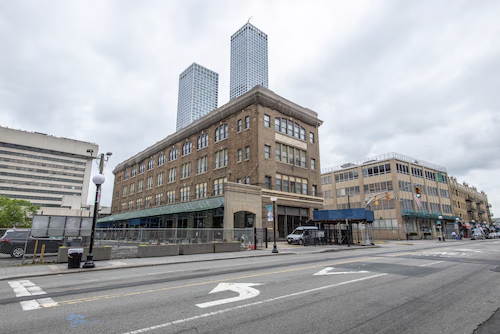
On Friday, April 26, the New Jersey Economic Development Authority shared fiscal concerns with the Jersey City Redevelopment Agency over the Centre Pompidou x Jersey City project. As I noted in a statement I released in February, the Pompidou museum was always expected to be a significant cost to residents of both Jersey City and New Jersey. According to NJEDA, the museum is expected to have an “an annual operation shortfall of approximately $19 million.”
Mayor Fulop responded to the letter by stating that NJEDA’s letter is a retaliatory response by Gov. Murphy for Fulop’s decision to withdraw support for first lady Tammy Murphy’s candidacy for U.S. senator. However, apart from Fulop’s insinuation that Gov. Murphy and his administration acted in bad faith, Mayor Fulop does not fully account for the financial argument, for which I have advocated and which has been supported by the NJEDA, for opposing the Pompidou museum.
The Pompidou museum, which has encountered numerous delays since its announcement in 2021, has incurred — and will incur — costs from the purchase of the historic Pathside Building in Journal Square (nearly $10 million); the issuing of debt by JCRA to cover the purchase ($10 million) and the accrual of debt since 2018; renovations of the Pathside Building ($10 to $30 million); payments to the Centre Pompidou (€29.36 million or $31.4 million); and the operation of the museum itself ($5 million to $15 million). Notably, the payment to the Centre Pompidou includes a yearly fee of €4.95 million, of which €1.95 million is for mere use of the name “Centre Pompidou.”
With Jersey City’s audit deficiencies, operational problems, and carrying of debt to subsequent fiscal years, Jersey City is not in a position to take on unnecessary and costly expenditures. Nonetheless, Jersey City has engaged in questionable projects and initiatives, which require significant funds and which will inevitably be burdened by Jersey City taxpayers.
In addition to Pompidou museum, the Loew’s Jersey theater has likewise become a significant cost to the city. Although I support its renovation due to its historic and cultural importance, the Loew’s Jersey theater’s renovation was originally estimated to cost $72 million, but the figure has since then drastically increased to over $105 million, an increase of over 45 percent. Despite the announcement three years ago, the renovation has still not begun.
Furthermore, the Bayfront Redevelopment Project, located along the Hackensack River waterfront, has also been encumbered by significant delays and costs. In 2018, Jersey City issued $170 million in bonding to purchase the land and furnish the necessary infrastructure improvements on the property. This development project is projected to have 35 percent of affordable housing, which is laudable and to be significantly commended. Yet, the manner in which Jersey City embarked upon this project raises significant fiscal concerns.
Jersey City is arguably in a vulnerable financial position, which has burdened Jersey City taxpayers in the form of higher property taxes. From 2021 to 2023, the average residential tax bill in Jersey City increased from $7,409 to $10,560, an increase of 42 percent. In comparison, over that same period, the average residential tax bill in the state overall increased from $9,076 to $9,569, an increase of only 5.4 percent. This significant increase in property taxes arguably contributed to substantial rent increases throughout Jersey City over recent years.
Apart from increasing property taxes and rents, Jersey City residents will also face increased water and sewage bills from the Municipal Utilities Authority. In April, the MUA proposed a 7 percent increase in their monthly water and sewage bills. This substantial increase follows the MUA entering to a 40-year agreement with Jersey City, where the MUA will operate the city’s water services in exchange for a payment of $50 million (distinct from the annual fee of $23 million). The MUA is also in a particularly weak financial position. With the MUA agreeing to replace the 16,000 lead pipes by 2030 and upgrade its sewage system at a cost of $1 billion, Moody’s, the credit rating agency, has lowered the MUA’s credit rating to “negative” and noted the agency’s $450 million in outstanding debt as of 2022.
While the school board and MUA are distinct from the municipality, nonetheless, City Hall must recognize the concurrent burden, which property tax and fee increase have on renters and homeowners.
To return to the Pompidou museum, according to Matt Friedman of Politico, there have been several instances in which the state raised concerns as to its funding. An operating gap of $19 million is significant, and the state of New Jersey is correct in raising concerns regarding this deficit.
The point to be made is that Jersey City is becoming increasingly unaffordable for Jersey City residents and working families. I have consistently repeated this issue and have made it a principal part of my campaign for mayor. The city must prioritize the stabilization of spending, cut unnecessary expenditures, and return to zero-based budgeting. Jersey City must engage in sound and responsible financial practices that will not simply defer outstanding payments to future fiscal years. We must live within our means.
By Jersey Journal Guest Columnist
By Jim McGreevey
Published: May. 06, 2024, 3:36 p.m.
Updated: May. 06, 2024, 3:37 p.m.