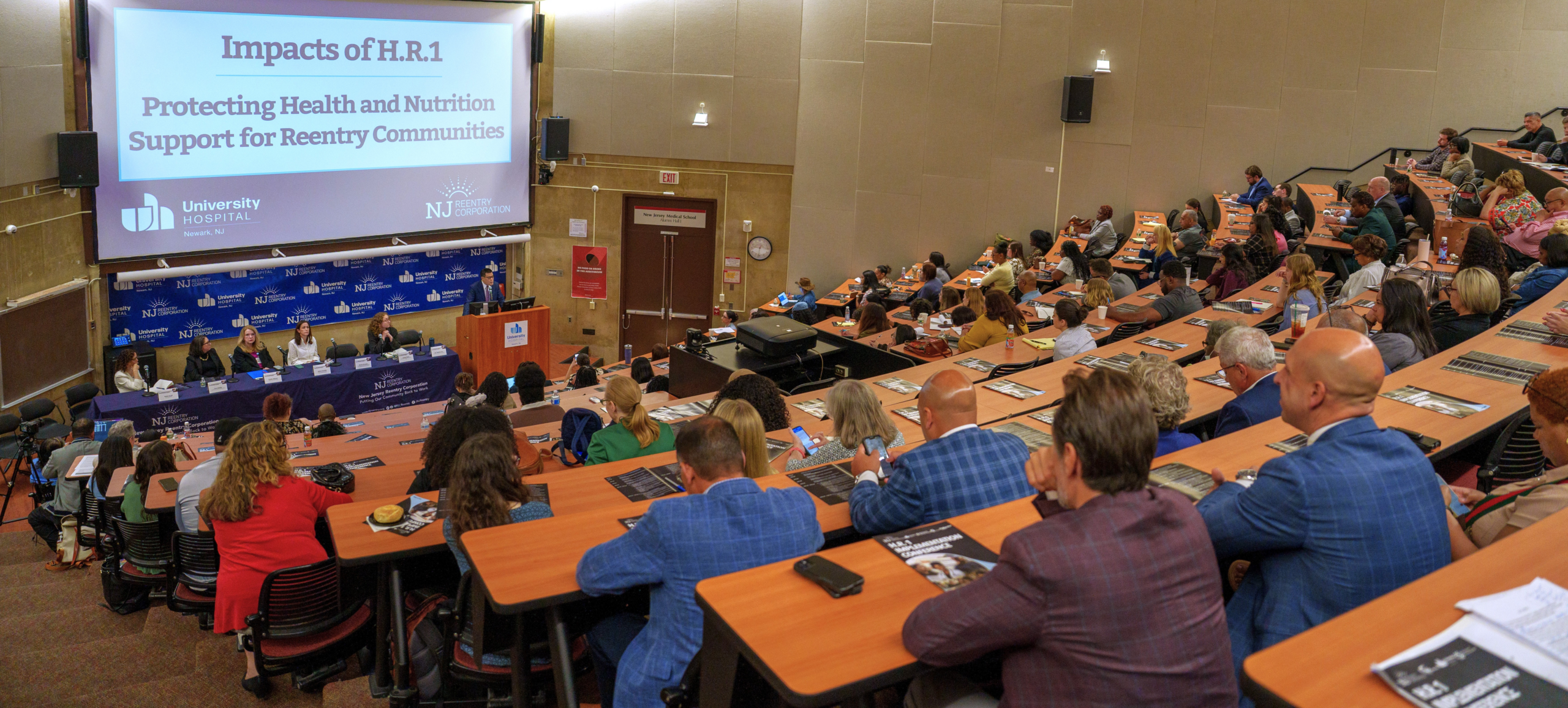
New Jersey Reentry Corporation Releases H.R. 1 Compliance Plan Following Statewide SNAP & Medicaid Action Meeting
NJRC will protect Medicaid and SNAP coverage for returning citizens, persons in recovery, and veterans
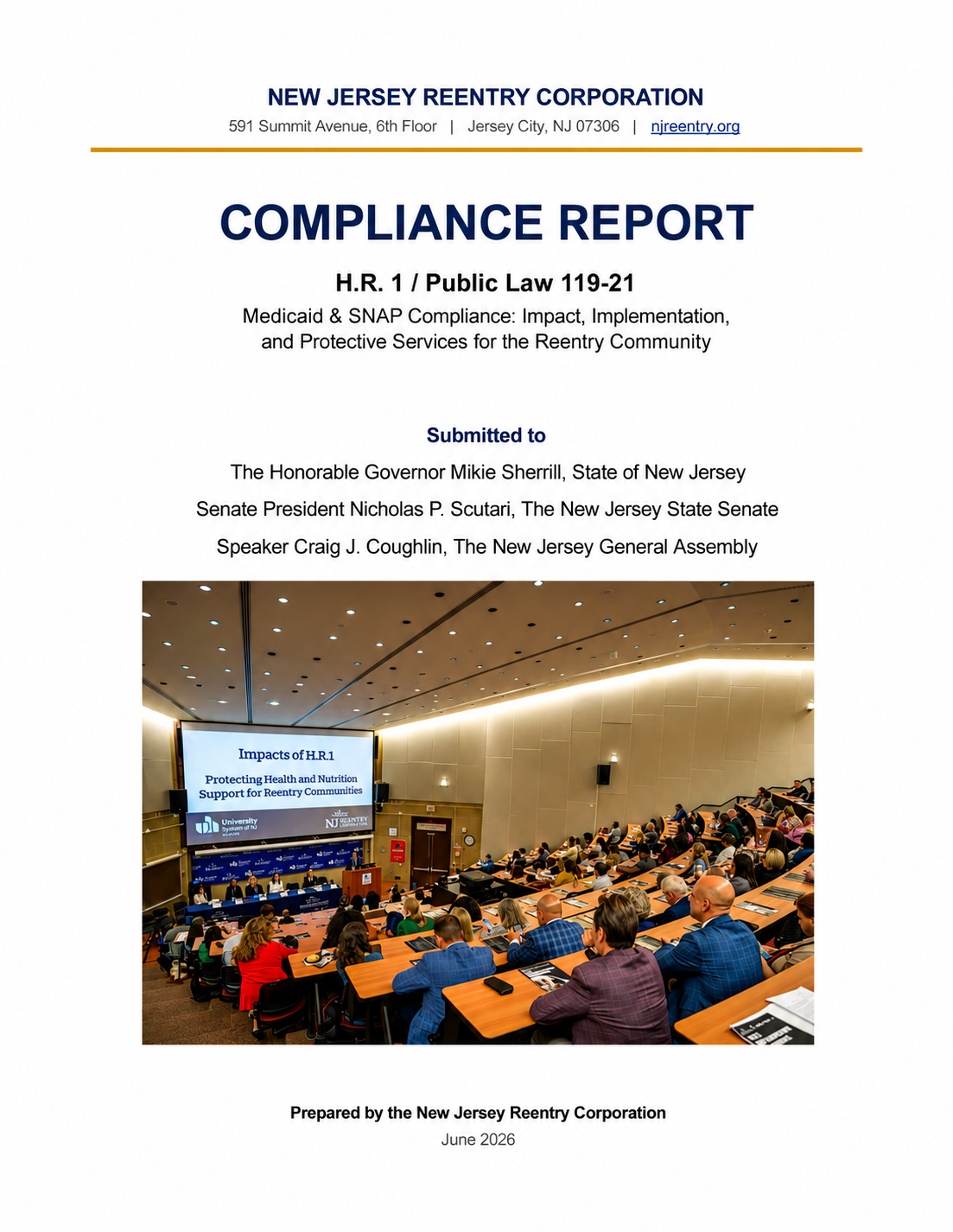
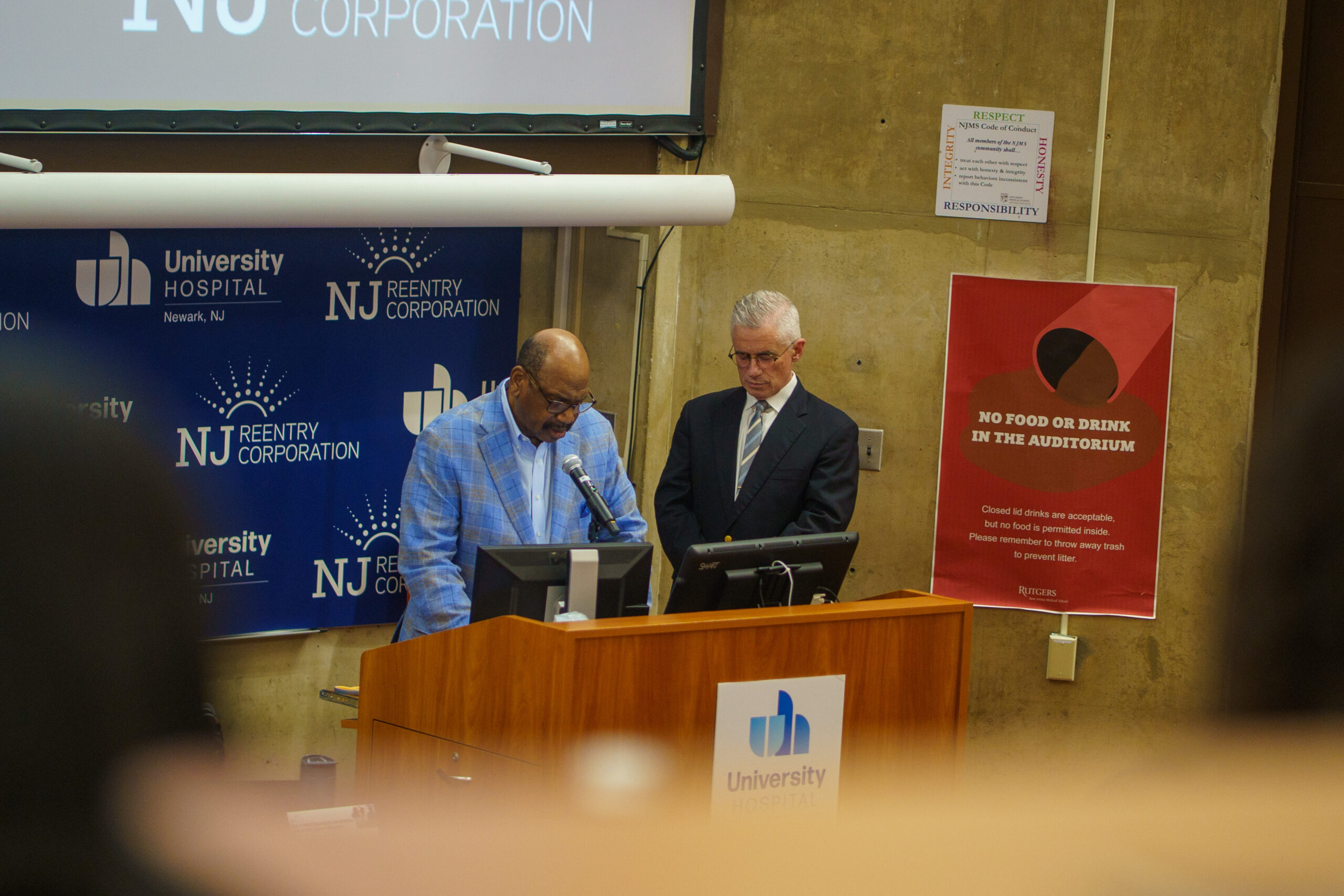
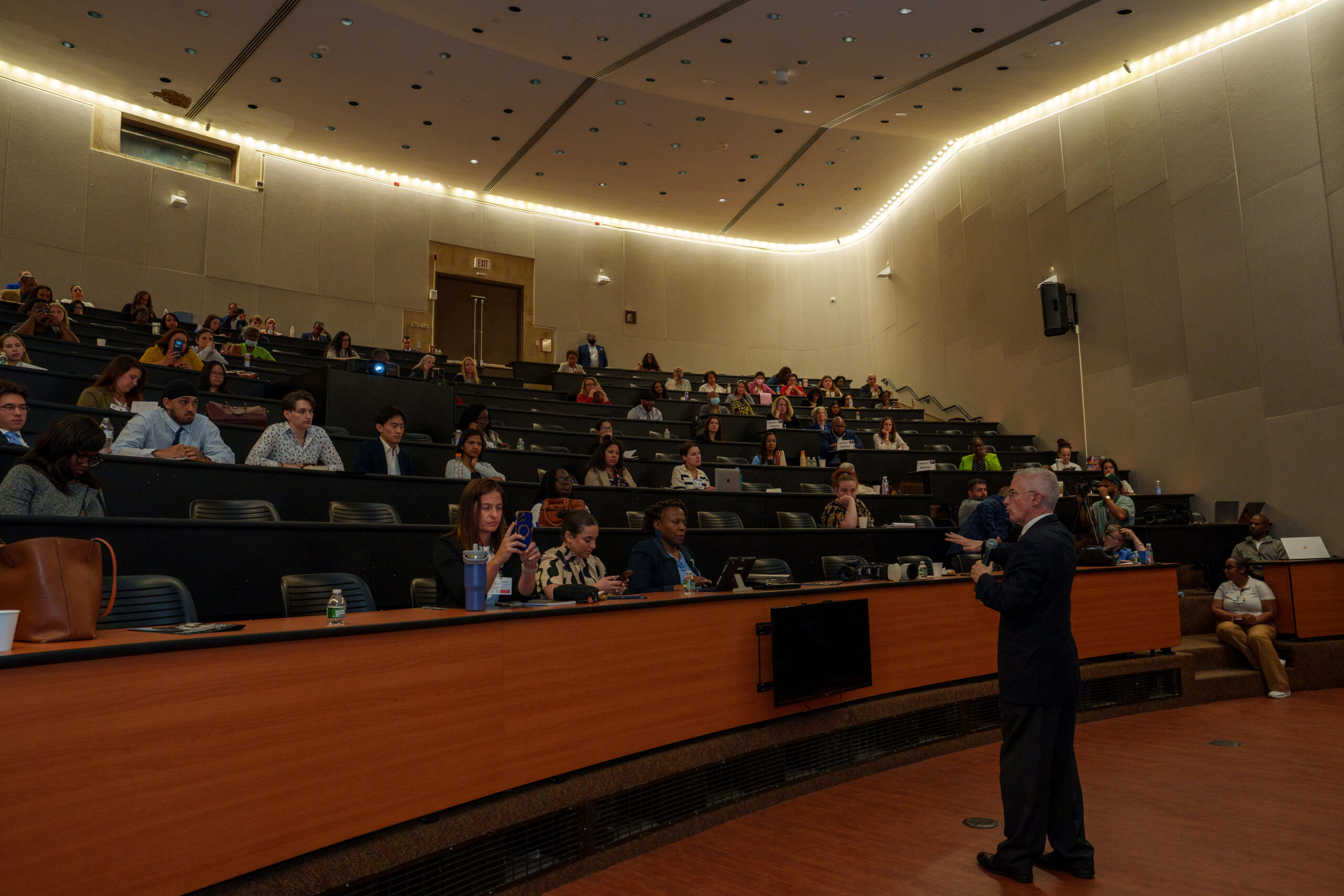
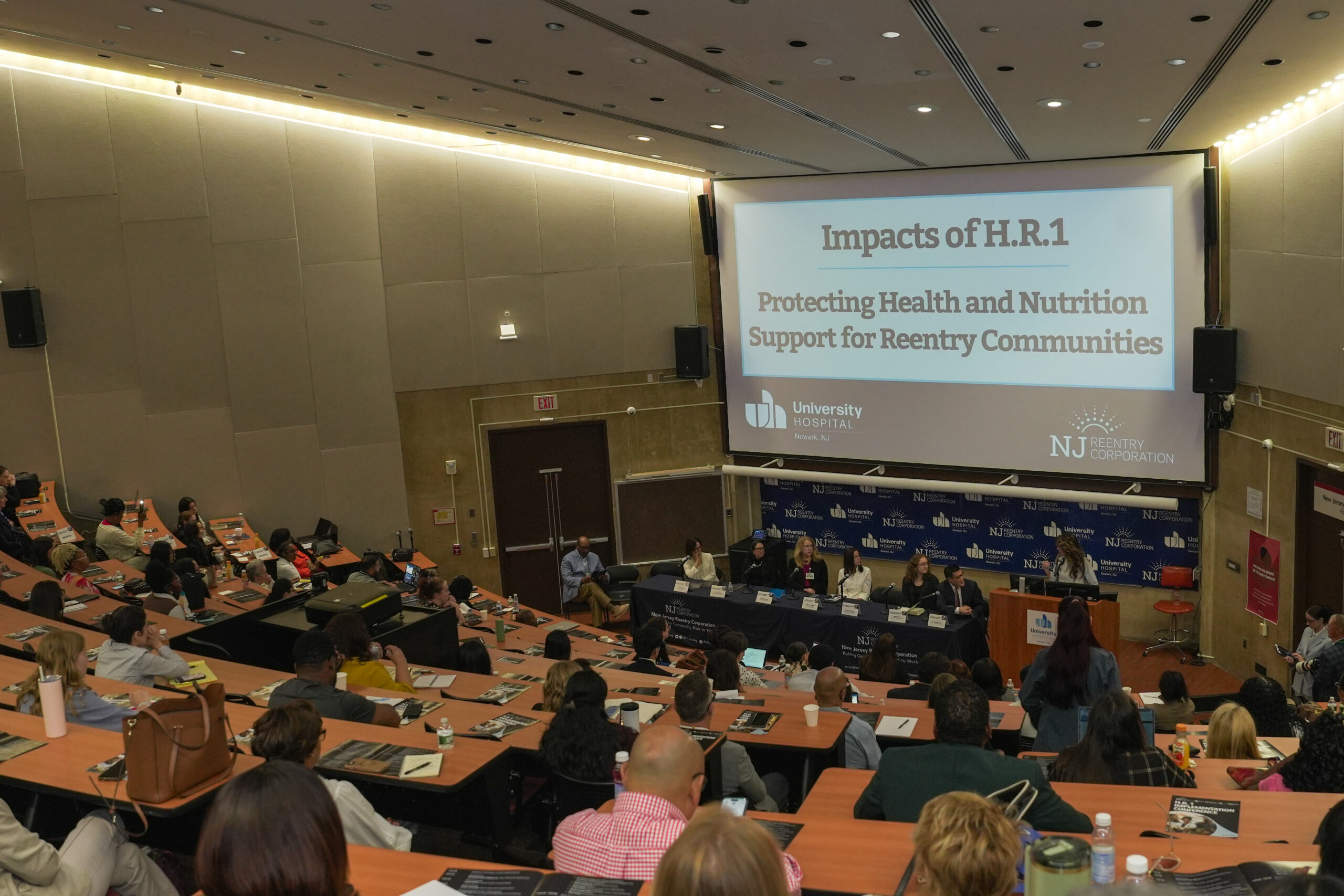
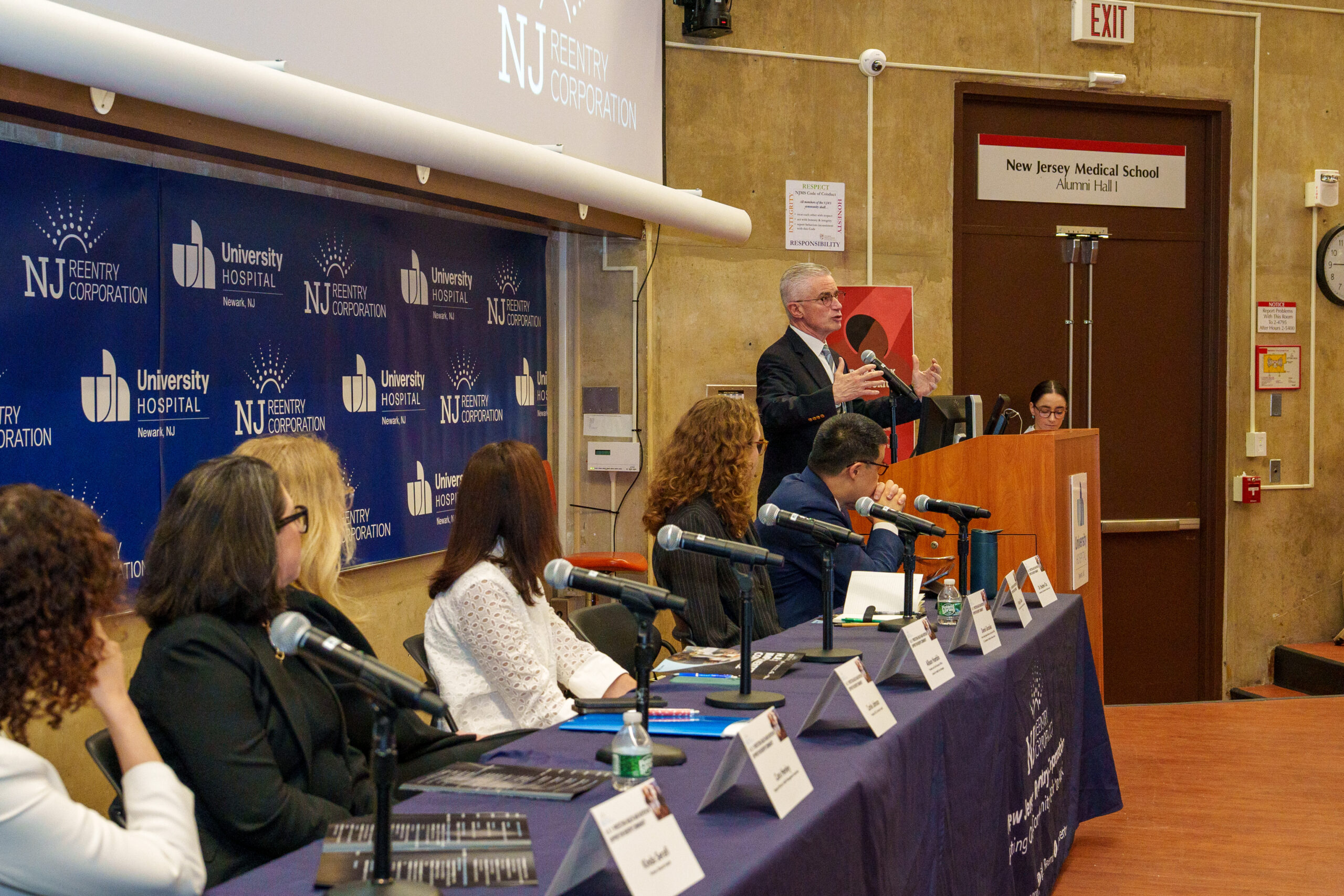
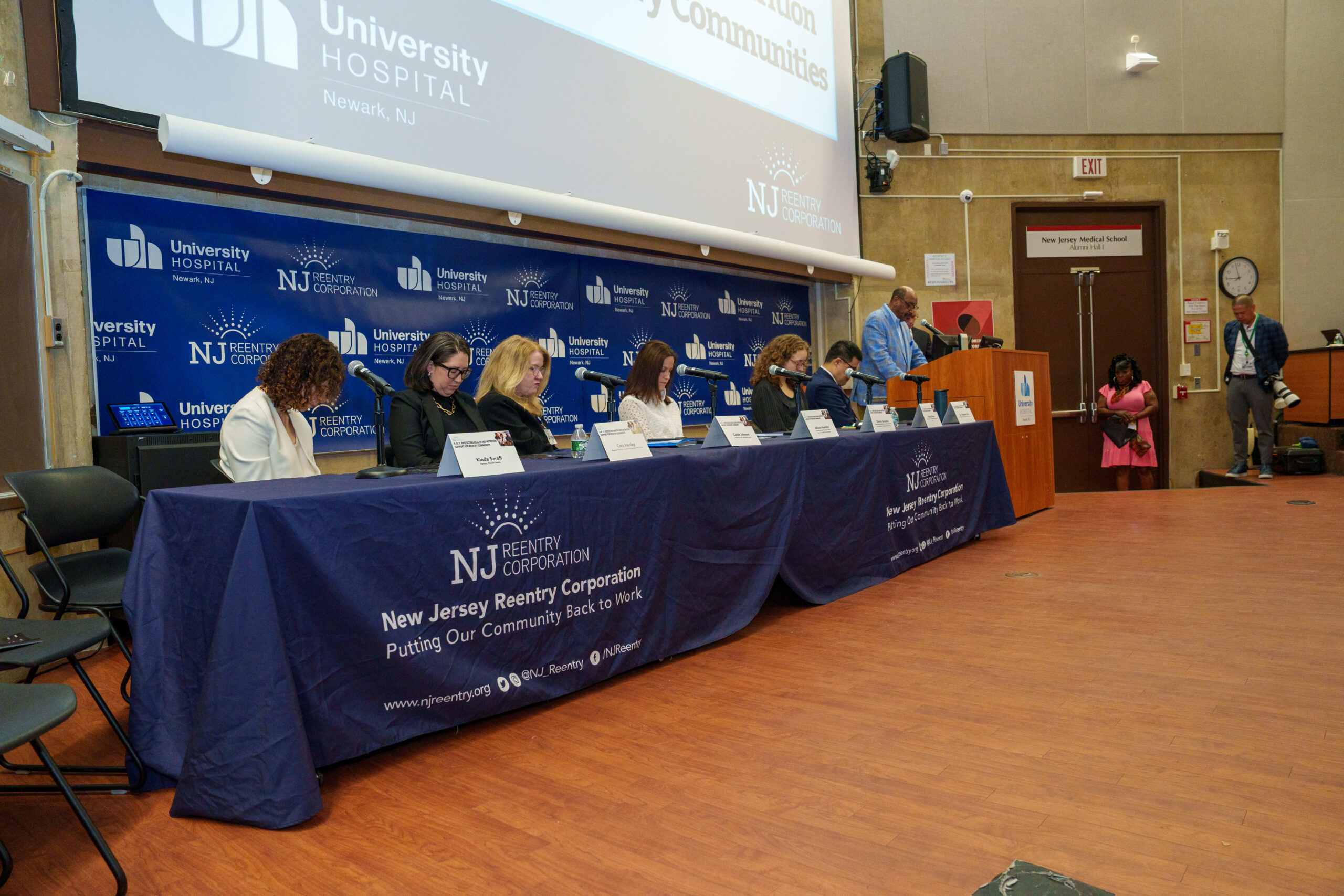
JERSEY CITY, N.J. — Following a statewide H.R. 1 Compliance Conference, convened by the New Jersey Reentry Corporation and University Hospital on June 9, 2026, NJRC released a comprehensive H.R. 1 compliance report proposing practical steps to help eligible residents retain Medicaid and SNAP benefits.
The report (attached) was submitted to Governor Mikie Sherrill, Senate President Nicholas P. Scutari, and Assembly Speaker Craig J. Coughlin.
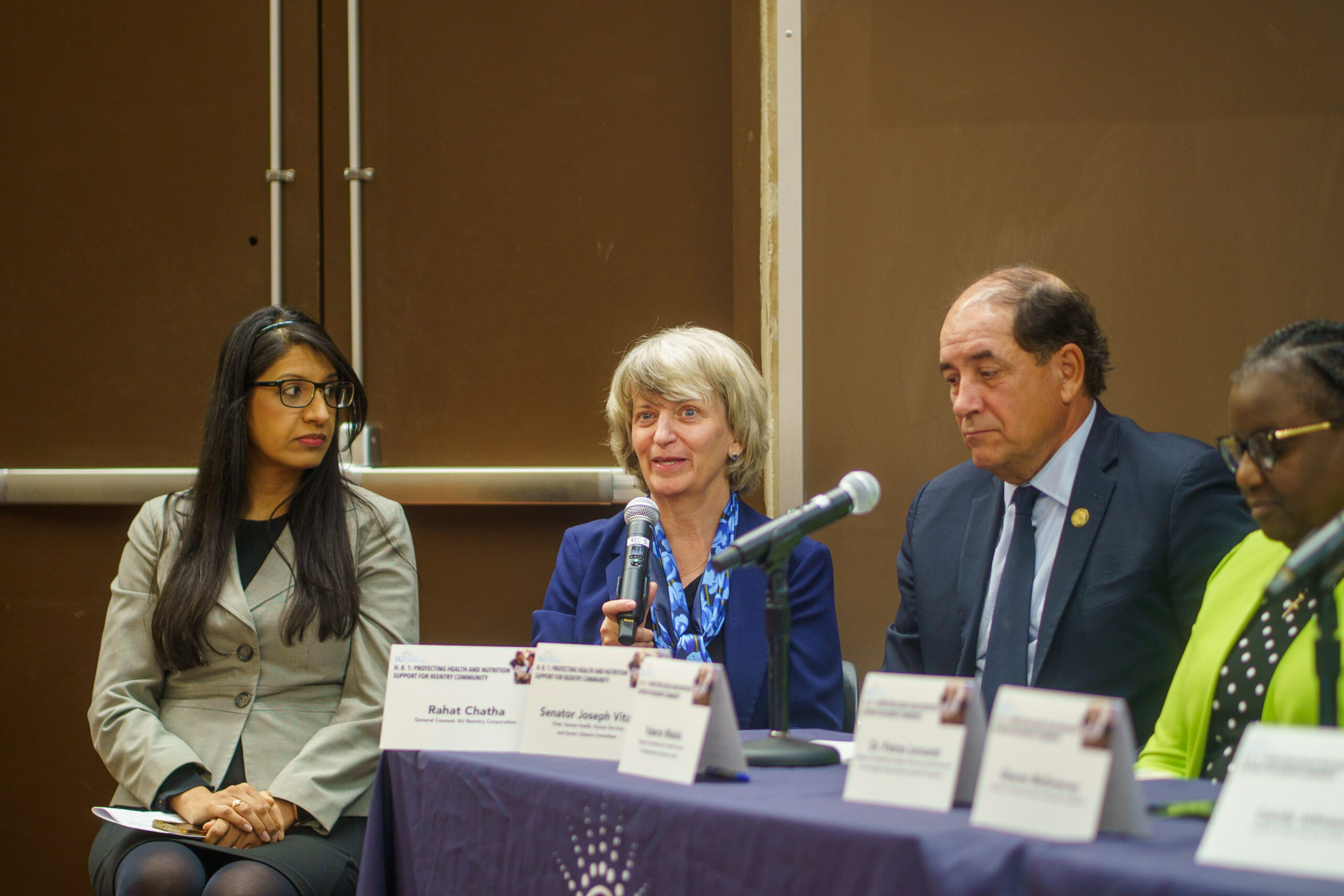
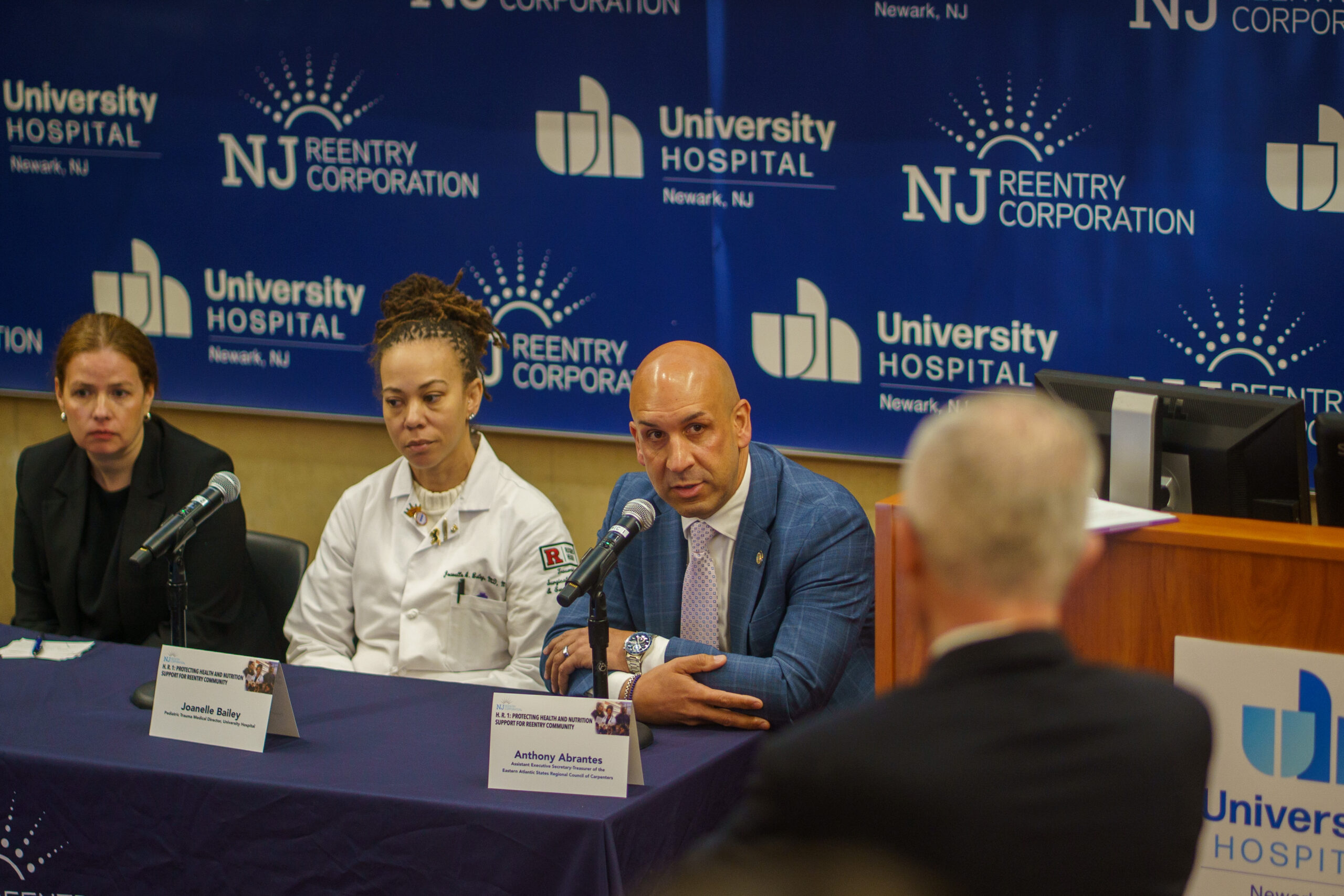
The Conference brought together legislative leaders, State officials, healthcare executives, physicians, behavioral health experts, and community organizations. Participants focused on preventing eligible residents from losing benefits because of incomplete, unavailable, or untimely documentation.
NJDHS projects that between 165,000 and 330,000 residents could lose NJ FamilyCare coverage, placing up to $3 billion in annual federal Medicaid funding at risk. Additional provider-tax-related reductions beginning in FY2028 could bring the total annual fiscal impact to approximately $6 billion. H.R. 1 may also reduce monthly SNAP participation by approximately 47,000 people.
At the Conference, Senate Majority Leader M. Teresa Ruiz emphasized the importance of supporting residents through the transition:
-
“The work that will be done here today is bridging those gaps, creating that bridge, making sure that you're not left alone and lonely, and making sure that at the end of the day, even if the blanket has holes in it, that person has a blanket to keep them warm at the end of the night.”
-
“And so that is what's unique about what's happening here. Not unique to New Jersey because we always do it better and we always try to do it first. Sometimes it takes us a little bit longer, but we get to the finish line with a policy that becomes a national marker for other states to emulate. We have a fierce Governor who recognizes human capital making investments in those spaces. We have huge advocates in this room who recognize that government can't do it alone. We have faith-based leaders who know that they're variable in an equation of success. We have brilliant minds from the federal and state levels, all here. And then we have individuals who have gone through this that we must listen to. Because if anyone's going to come up with a solution, it's the person who's actually had this lived experience.”
-
“And then you have policymakers and heads of leadership that call New Jersey home, that will not allow University Hospital and the constituents and the people that she represents to have another day thrown upon them that says, you cannot. I'm here to tell you that we can. And it's not without ease, and it's not without work. And it won't come without fatigue, but it will come with hope, with compassion, with opportunity, and at least with some sense of faith. So I leave you with that. We don't have all of the answers, but we've been at this rodeo one too many times. And remember that administration is only four years. So we continue to do the good work. We protect. We dip in, just brought Peter to pay Paul. But we stay focused on how New Jersey can protect its most vulnerable. Make the investment in that human being.”
Senator Joseph F. Vitale, Chair of the Senate Health, Human Services, and Senior Citizens Committee, stated:
-
“The moral implications of HR1 are extraordinary, and they're multi-layered, and they just go out here in the lives of millions of people that will be impacted while they are just trying to live their lives.”
Speaker Coughlin highlighted Assembly Bill 3883, which would help residents navigate the new requirements, including through qualifying volunteer service:
-
“Because let's make this, let's be clear about what this is. HR1 is a full frontal attack on helping people in the state of New Jersey. It's nothing less than that.”
-
“Having twice-a-year requirements to check in is not designed to help people. There used to be exceptions to some of the rules. Veterans were exempted from some of the work requirements, people who were homeless, for exempted people who were just getting, who were aging out of foster care. All those are gone. They've done everything they can to create a system that is designed to make sure that the people can't take advantage of the system. And that's just not fair, and it's not right, and we need to do what we can." "We passed...3883, and what that is designed to do is to make sure that residents have the tools that they need to navigate the new work requirements coming up for SNAP and for Medicaid, particularly with regard to volunteering.”
A central concern is the medical-frailty exemption. The CMS interim final rule requires consideration of whether a medical condition prevents an individual from working, but the evidentiary standard remains unclear.
NJDHS Commissioner Dr. Stephen Cha emphasized partnership:
-
“Projections suggest as many as 330,000 New Jerseyans could lose New Jersey Family Care due to the new federal burdens...If we can get that 330,000 down to 165 and preserve coverage for 150,000 people, we're still losing a lot of people in coverage. We're still losing a lot of federal investments, but we can preserve lives, we can preserve budget, we can preserve benefits for so many people. And I know that goal of preserving coverage is a goal I share with everyone in this room.”
-
“The reality is our eligibility system is incredibly complex and reentry makes that even harder, particularly when we have unmet behavioral and physical needs by people who are reentering...So we're trying to do what we can to avoid any preventable loss of coverage. That leads me to the last point, which is partnership. How do we work with state agencies, counties, providers, community organizations, all of you in this room, to stay closely aligned on how we support people through this?”
Assistant Commissioner Gregory Woods cautioned that county social service agencies are already stretched:
-
“I am concerned this is a whole new layer that is being placed on agencies that are already stretched very thin. So even before we get to the sort of the question of coordination with outside entities, it is critically important that we are, that each of the county social service agencies are, prepared just for that workload that is coming their way in January.”
-
“We are not powerless here. There are things we can do to mitigate the impacts. Everyone is stretched thin. We're all going to have to reach a little bit. We're all going to have to be accountable. And I think just from a Medicaid perspective, our commitment is we will be doing everything we can, not just getting up to January 1st, but beyond. We're going to continually reassess what is working, what we can do better, where is a safe place, and what we can use differently. We're not going to be perfect. There are real challenges we face. But my answer is just for everyone who's involved with our members to work together with us, and we have to work harder and smarter.”
Chief Phil Alagia, Chief of Staff for Essex County, highlighted the critical role of pre-release planning and community partnerships in supporting successful reentry:
-
“We're always working with as many community agencies and partners as possible, with New Jersey Reentry Corporation...We're trying new innovative things to communicate, but based on the new law, the new regulation that came into effect, [Councilman] Anibal [Ramos] called me this morning that we had well over 100 individuals come in today or yesterday due to new [termination of SNAP benefits] and many more who said they are not even going to reapply.”
-
"While they're in our facility, we have a robust Social Services Department under Dr. Roxanne Vega. A lot of them come in; it's not about suspending their Medicaid because they are not on Medicaid; it's about helping them get on Medicaid so that when they are released, we can help them. But again, they come in with so many things that prevent that from happening. Most of them don't know where their birth certificates are; most of them don't have identification that's required. So the important thing to do while they are incarcerated is make sure that we get all that stuff in order, and we partner with community agencies, New Jersey Reentry, clergy, we try to bring as many of the outside community resources in so that the first time they're dealing with the community is not when they're released, so it's a continuation.”
Dr. Petros Levounis, Chair of Psychiatry at Rutgers New Jersey Medical School and former president of the American Psychiatric Association, observed:
-
“We’re forcing people over and over again to prove how bad they are. This will have a significant psychological toll on our patients.”
University Hospital President and CEO Carole Johnson emphasized the broader healthcare consequences:
-
“You can't take a trillion dollars out of the health care system and expect it's just going to affect the Medicaid population. This is going to affect everyone. Whether you come to University Hospital or not for services, your healthcare provider is going to see less revenue or their system is going to see less revenue. The way that they are sustained is in danger as well.”
-
“The threat is existential. What is happening to Medicaid and SNAP is happening to us. It's not happening by us. When bad policy happens, the reentry community feels it first because they're the folks who are fighting so hard to get on their feet. We're going to fight to make it possible that people can continue to do what they need to do in a very, very challenging environment. The state can't solve this problem on its own. We can't solve the problem on our own. We all have to be together in this fight.”
Returning citizens face particular barriers, including missing identification, unstable mailing addresses, behavioral health needs, and limited access to documentation. Veterans have also lost their prior automatic SNAP exemption and must now establish another qualifying exemption or satisfy the work requirement.
NJRC respectfully intends to assist the State as a documentation and compliance partner. Its “Reentry Workforce Readiness Program” would combine benefits screening, identification recovery, workforce preparation, digital literacy, supervised job search, volunteer service, work experience, and credentialed training so that participants may meet the 80-hour monthly work program requirements for SNAP and Medicaid.
As a SNAP Employment and Training provider and a qualified Medicaid work program, NJRC’s proposed framework includes benefits screening, exemption documentation, qualifying-activity enrollment, monthly verification, and assistance responding to notices and cure periods.
NJRC is grateful for the governmental and medical leadership demonstrated at the June 9 convening and offers this proposal in support of the State, counties, healthcare providers, and the residents they serve.
About NJRC
The New Jersey Reentry Corporation provides access to healthcare, workforce training, legal services, case management, connections to addiction treatment, identification and recovery, and veteran-specific support. NJRC participants have a three-year reincarceration rate of 14.01 percent, compared with 22.0 percent statewide.
For additional information, visit https://njreentry.org/h-r-1-reentry-resources/. or email benefits@njreentry.org.